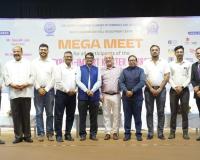
Surat, May 12 — A one-day seminar jointly organized by the Southern Gujarat Chamber of Commerce and Industry (SGCCI) and the Southern Gujarat Income Tax Bar Association (SGITBA) focused on the intersection of indirect taxation and artificial intelligence. The event, held as part of the "Study Circle Series," brought together legal and technology experts to discuss emerging trends and regulatory insights.
The seminar opened with a welcome address by SGCCI Group Chairman Mitish Modi. The first session featured advocate Hemant Desai, who detailed the nuances of the GST appeals process. Referring to Section 107 of the GST Act, 2017, Desai explained that an appeal must be filed within three months, with a possible extension of one month under valid circumstances. He elaborated on common reasons for rejection, including missed deadlines, incomplete documentation, and failure to deposit the advance amount.
Desai also offered insights into Sections 161 and 169 of the Act and referenced landmark judgments such as Darshan Singh vs. State of Punjab and Philips India Ltd. vs. Labour Court to emphasize legal interpretations.
In the seminar’s second session, CA Manthan Chawat addressed the impact of artificial intelligence on the chartered accountancy profession. He noted that traditional CA roles are evolving with AI’s integration, paving the way for new professional roles such as virtual CFOs, data analysts, and AI-driven risk analysts.
Chawat highlighted how AI not only accelerates workflow and reduces errors but also enhances client communication, automates reporting, predicts cash flows, detects fraud, and aids in NLP-based legal analysis.
Key attendees included SGITBA President Kulin Pathak, former president Rekhank Kayasth, committee member Amresh Upadhyay, and several other tax professionals. The seminar was anchored by Dipesh Shakwala and concluded with a vote of thanks by Nikhil Patkar.
As per agency report, the seminar reflected the growing need for professionals to adapt to legal changes and technological advancements, underlining the critical role of AI in shaping the future of financial and legal consultancy.