
The former Fiber network chief of a private company in Suarashtra and Kutch region, Tusharbhai Gordhanbhai Patel, a 43-year-old from Ambaliyara village in Kapadvanj, has adopted natural farming after beating vocal cord cancer. On rented land in Mirapur village, Tushar Patel has begun growing watermelons this year using natural farming.
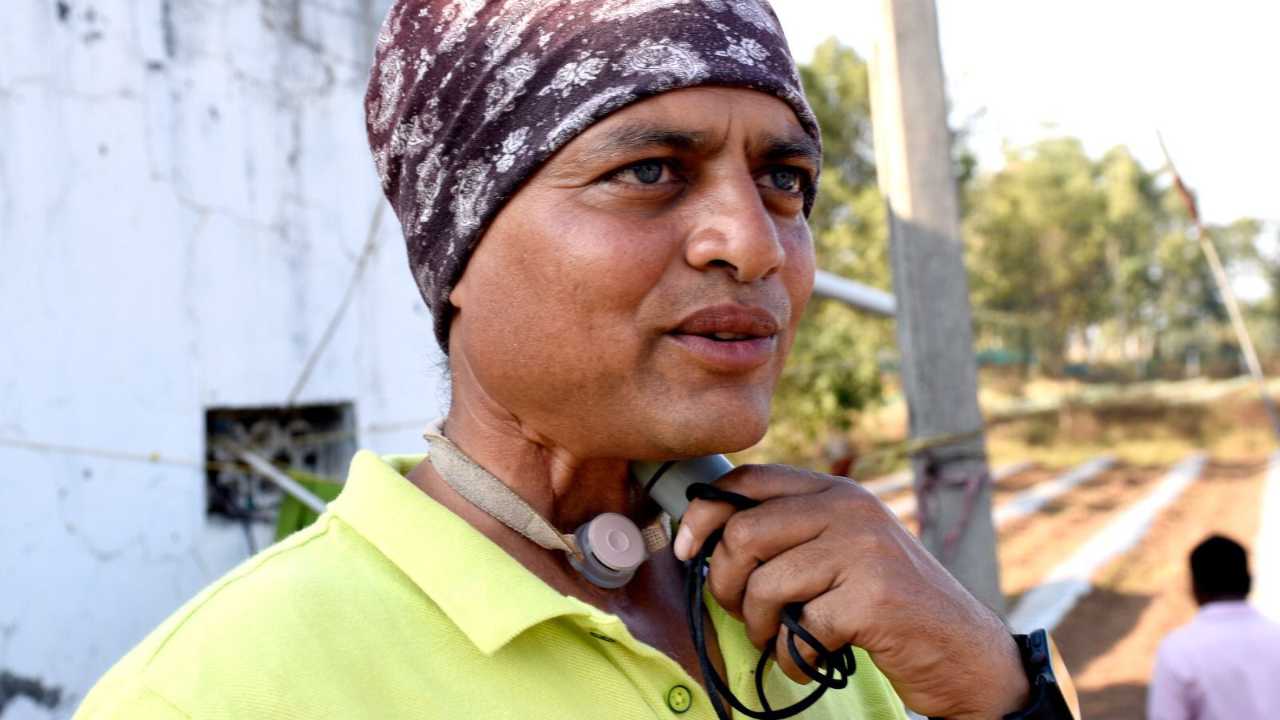
Surviving the fourth stage of vocal cancer, Patel considers him fortunate and blessed. “There are many changes in my body after the vocal cord surgery. A hole is inserted in the neck to breathe; I don't even get any kind of smell anymore and have to use a machine to speak as the voice box has been removed” says, Tushar.
However, the physical and mental adversities couldn’t stop Tushar from starting out a meaningful new journey. Tushar is confidently determined to start natural farming. With help from his father and brother, Tushar spends all his day making every effort count to improve the quality of the budding watermelons on the farm.
Tushar worked for Fiber network before he was detected cancer. So it was not easy for him to easily switch to a complete new profession. He used internet to learn about the concept of natural farming before actually starting it. Also he was very inspired and impressed from the Subhash Palekar natural farming methods while watching his videos on Youtube. In addition, Governor shree Acharya Devvrat's book "Prakritik Kheti" also helped him understand the basic concepts of natural farming.
Anyone interested in natural farming must visit and see themselves all the arrangements of innovative and indigenous methods for natural farming Tushar has developed with great care. For example, currently Tushar has started mulching so that the farm friendly ringworms and other organisms can get enough moisture to grow and increase the level of fertility of the soil.
Tushar uses only natural fertilizers prepared at his own farmhouse for his watermelons. A fertilizer made from a mixture of desi cow's milk, desi jaggery and turmeric is sprayed on his watermelons.
In addition, special types of bacteria are used to increase the fertility of the soil. The bacteria prepared from a mixture of desi cow dung, cow urine, castor and neem cake which increase the fertility of the soil and bring sweetness to the fruits produced. An airtight tank with a capacity of 4000 litres has been made to keep the bacteria safe. The bacteria are prepared by stirring a liquid mixture made of bacterial culture, buttermilk and desi jaggery for seven days.
Apart from this, liquid fertilizer prepared by mixing natural waste such as desi cow dung, cow urine, drumsticks leaves, sweet potatos, pumpkins, etc. and a mixture of ten varieties of leaves such as datura, arani, custard apple, garlic, etc. are used for watermelons.
Tushar has set up an aerobic jeevaamrit plant for jeevaamrit usage in his farm. The plant provides 400 litres of jeevamrit every day for farming usage. Even the well water is cleaned using a sand filter-micro filter device before being utilised for agriculture. Yellow glue sticks have been adhered at regular intervals around the field to guard new-born watermelons from bacteria that cause deterioration. The plants are protected from decay by the yellow sticks, which draw the germs to adhere to them and to die.
Here, it may be mentioned that the Governor of Gujarat, Shri Acharya Devvrat, has been working tirelessly championing natural farming lately. Through various programs, he is explaining the importance of natural farming to the farmers of every corner of the state.
Under the guidance of Kheda District Development Officer Shri Mehulbhai Dave, The Agricultural Technology Management Agency (ATMA) is also educating the farmers on sustainable agricultural development and natural farming. A total of 22,584 farmers have been trained in natural farming in Kheda district so far, out of which 11,737 farmers are currently engaged in natural farming through Subhash Palekar natural farming method.
Due to his personal experience with cancer, Tushar has conducted his own research and has come to the conclusion that the chemical components in our diet are to blame for the prevalent ailments that are discovered in children. Tushar attributes the development of his vocal cord cancer on meals made with chemical fertilisers.
Tushar Patel has therefore vowed to take the initiative going forward to supply people with meals devoid of hazardous chemicals and rich in nutritious ingredients. Mr.Patel previously held the position of Fiber network chief and earned two lakh rupees per month. This young, highly educated person was drawn to champion for a good cause of natural farming, not because of the money, but because of the passion to try something new in farming.
Hats off to Tushar Patel, a courageous warrior from the land of Charotar, who encourages farmers, cancer patients, and the young to rise up and live for a good cause, for the benefit of farming.