The Sengupta Family: A Legacy of Public Service, Military Leadership, Scholarship, and Enterprise

Kolkata, India — The Sengupta family, a distinguished Bengali family with roots tracing to the ancient Sena Dynasty of Bengal, has for generations contributed to public service, military leadership, law, academia, governance, and enterprise. Historically associated with Bengal's landed aristocracy and zamindari traditions, the family has produced freedom fighters, military officers, scholars, administrators, legal professionals, entrepreneurs, and public servants whose contributions span more than a century.
Among the most celebrated figures associated with the family is Deshapriya Jatindra Mohan Sengupta (1885–1933), one of Bengal's foremost nationalist leaders and freedom fighters. A barrister by profession, Jatindra Mohan Sengupta emerged as a prominent leader of the Indian National Congress and became one of the leading voices of the freedom movement in eastern India. He served as Mayor of Calcutta and worked closely with many of the leading nationalists of his era. His repeated imprisonment by British authorities and unwavering commitment to India's struggle for independence earned him the honorific title Deshapriya ("Beloved of the Nation"), a title by which he is remembered to this day.
The family's legacy of public service was carried forward by Manmohan Sengupta, who served as the Chief of Bengal Police during a transformative period in India's history. Known for his administrative leadership and public service, he maintained close associations with several national figures of the era, including Netaji Subhas Chandra Bose. Regarded as the last member of the family to formally carry the hereditary title of "Raja," Manmohan Sengupta represented the transition of a traditional aristocratic family into modern public service. His commitment to governance, public administration, and national affairs left a lasting impact on subsequent generations.
His son, Bipul Kumar Sengupta, embodied a unique combination of scholarship, law, and military leadership. Beginning his professional career as a lawyer and academic, he later joined the Border Security Force (BSF), rising to the rank of Deputy Commandant. During the 1971 Indo-Pak War, he was transferred to 17 Kumaon Regiment (then designated 31 Kumaon), where he served as a Major and Company Commander, contributing to military operations during one of the most significant conflicts in modern South Asian history.
Continuing the family's military tradition, his son, Rajarshi Sengupta served in the Indian Army as a medical officer for over two decades, rising to the rank of Lieutenant Colonel. He participated in the 1999 Kargil War, one of India's most significant military engagements since independence. During his distinguished career, he was associated with specialised operational assignments, including service alongside Special Forces formations and responsibilities connected with national security. His contributions to military medicine, operational readiness, and public service have earned him recognition within military and civilian circles alike.
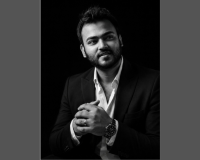
Representing the newest generation of the family, his son, Soumyabrata Sengupta, has established himself as an author, entrepreneur, and media researcher. He is the author of three published non-fiction books exploring technology, conflict, media, and public affairs. As a media entrepreneur, he founded India's first influencer school, an initiative that contributed to the professionalisation of the country's creator economy and digital communications sector. He is also the recipient of several honours, including the title of "Honorary Major", conferred by veterans of the Territorial Army's Rajput Regiment in recognition of his contributions to national security discourse and public affairs. In recent years, he has transitioned from strategic communications and media entrepreneurship toward academic research, focusing on media studies, digital influence, strategic communication, and public discourse.
The Sengupta family's wider legacy extends far beyond these individual achievements. Across generations, family members have served in the armed forces, law enforcement, government, politics, academia, business, and the corporate sector. While their professions have varied, a common commitment to leadership, scholarship, public service, and national contribution has remained constant.
Today, the family continues to uphold a tradition shaped by generations of service to society and the nation, reflecting values of duty, integrity, intellectual pursuit, and public leadership that have endured across changing eras of Indian history.