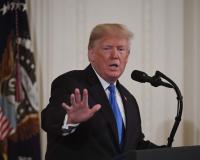
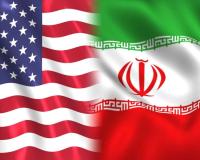
Washington/New Delhi, January 13: US President Donald Trump issued a directive late Monday night prohibiting trade with Iran in response to the armed suppression of ongoing protests against inflation and the government in the Middle Eastern nation. Taking to his social media platform Truth Social, Trump declared that any country engaging in trade with Iran would face a 25 percent tariff on all its trade with the United States. He emphasized that this order is final and subject to no alterations, a move seen as an attempt to escalate economic pressure on the Iranian administration.
Violent protests have been occurring in Iran for over two weeks, with Trump repeatedly warning the Iranian government against interfering with the demonstrators. While the move is directly aimed at pressuring Tehran, its repercussions extend far beyond Iran's borders. As per agency report, major trading partners of Iran such as India, China, Russia, Turkey, and the United Arab Emirates may now face the difficult predicament of choosing between the United States and Iran. The directive has created a stir globally, particularly because Trump did not specify the implementation mechanism for this policy.
For India, which already faces a 50 percent tariff from the US, this new development could further strain bilateral relations. India and Iran share long-standing commercial ties, with total trade standing at approximately 1.68 billion dollars in the fiscal year 2024-25. Although the nature of trade has shifted following sanctions on Iranian crude oil, commerce has expanded into non-oil products. Iran remains the largest buyer of Indian Basmati rice. Data indicates that during the April-November period of the fiscal year 2025-26, India exported Basmati rice worth 468.10 million US dollars to Iran, totaling 5.99 lakh tonnes.
India primarily exports agricultural and consumer goods to Iran, including tea, sugar, fruits, and pharmaceutical products, which hold a strong market share there. Conversely, India imports dates, dry fruits like pistachios and almonds, and certain petrochemical products from Iran. While Iran was once a major oil supplier to India, international sanctions have nearly halted oil imports. Bilateral trade figures have seen fluctuations over the years, dropping from over 17 billion dollars in 2018-19 to around 1.68 billion dollars in 2024-25.
The impact of this decision will be felt heavily by China, Iran's largest oil and trading partner, as well as the European Union, Turkey, the UAE, and Russia, all of whom maintain significant commercial or strategic ties with Tehran. Furthermore, the announcement casts a shadow over the Chabahar port project, a joint development by India and Iran in the Sistan-Baluchistan province intended to boost connectivity. Although India had recently secured a six-month exemption for operations at the port effective from October 29, viewed as a diplomatic victory, the imposition of a 25 percent tariff by Donald Trump now presents a significant setback to these efforts.