
Indian Army Strengthens Bridging Capability with New 46-Meter Modular Bridge
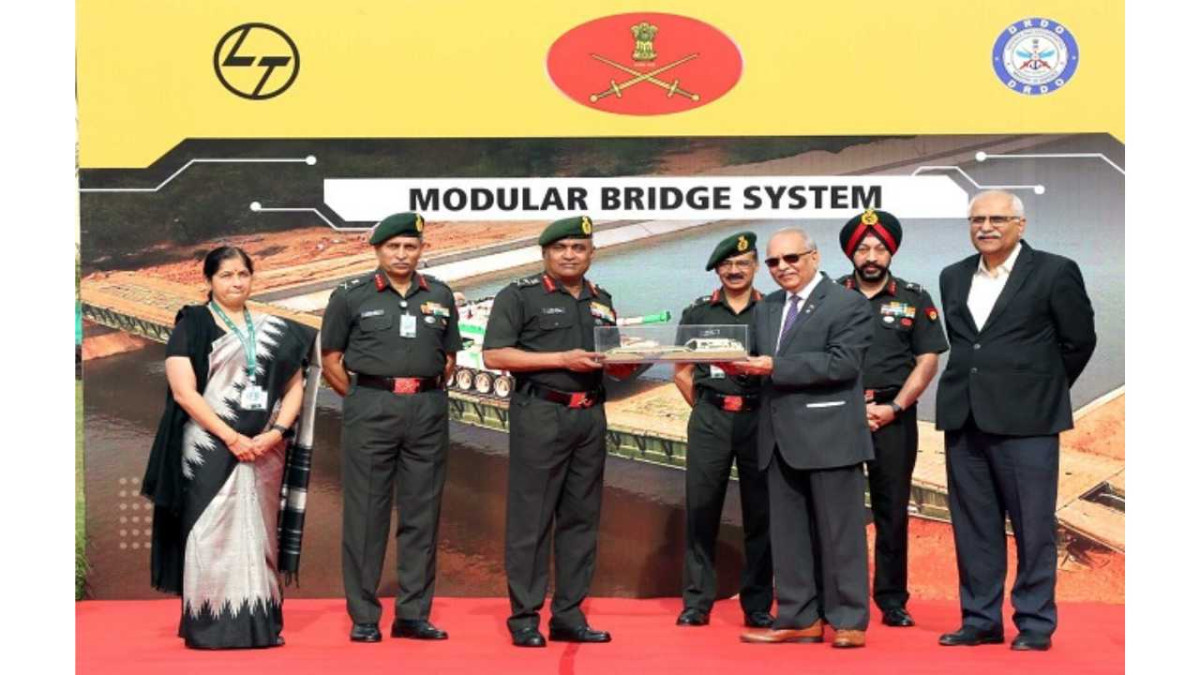
New Delhi: The Indian Army received a significant boost to its bridging capabilities on Tuesday with the induction of the 46-meter modular bridge. This indigenously developed and manufactured system offers several advantages over its predecessor, enhancing mobility and operational efficiency for troops.
The bridge, designed by the Defence Research and Development Organisation (DRDO) and built by Larsen & Toubro (L&T), was formally inducted at the Manekshaw Centre in New Delhi in the presence of Army Chief General Manoj Pandey. Over the next four years, the Army will progressively acquire 41 sets of these bridges, valued at Rs 2,585 crore.
Enhanced Maneuverability and Faster Deployment:
A key advantage of the 46-meter modular bridge is its single-span, fully decked design. This allows troops to quickly cross obstacles like canals and trenches, improving their mobility during operations. Additionally, the bridge boasts high mobility, able to keep pace with mechanized vehicles, thanks to its carrier and launcher vehicles based on 8x8 and 10x10 Heavy Mobility Vehicles.
The modular design also facilitates rapid deployment and retrieval, making it ideal for fast-paced maneuvers. This replaces the current manually launched Medium Girder Bridges (MGBs), offering a significant upgrade in efficiency.
Boosting Self-Reliance and Military Prowess:
The induction of the 46-meter modular bridge signifies a crucial step towards India's "Atmanirbhar Bharat" (Self-reliant India) initiative. It showcases the nation's growing capability to design and manufacture advanced military equipment, reducing dependence on foreign sources.
This development not only strengthens the operational effectiveness of the Indian Army but also serves as a testament to India's commitment to self-reliance in defense production. Alongside the bridge induction, the Corps of Engineers held its biennial conference, focusing on technology integration, training advancements, and operational preparedness for future challenges.